Your child can do more.
Neurofeedback helps the brain find balance and lets your child finally show their full potential.
Fill out the questionnaire and find out which training is best for your child
of clients pay for training again
training sessions completed
minutes per session
working with clients
What parents notice
Better focus
Your child can stay focused longer on tasks, homework, and conversations.
Less impulsivity
Reduced impulsive reactions, interrupting others, and emotional outbursts.
Better school performance
Improved ability to learn, remember, and organize schoolwork.
Better sleep
Falls asleep easier, sleeps more peacefully, and wakes up more rested.
Better social skills
Gets along better with peers, understands social situations more easily.
Greater self-confidence
Your child feels more capable and confident in their abilities.
Do you recognize your child in some of these challenges?
Fill out the questionnaire and find out how neurofeedback can help
How Neurofeedback Training Works
Neurofeedback uses reward-based learning (operant conditioning), the mechanism underlying all learning, to create new synaptic connections and learn new patterns of functioning.
Changes in the quality of the video playback represent rewards that give your brain a subtle nudge towards better functioning. These nudges, scientifically called synaptic facilitations, accumulate over time into significant and long-lasting functional improvement.
How the Umo Service Works
Umo is a subscription service: once you reach your goal, you simply return the equipment.
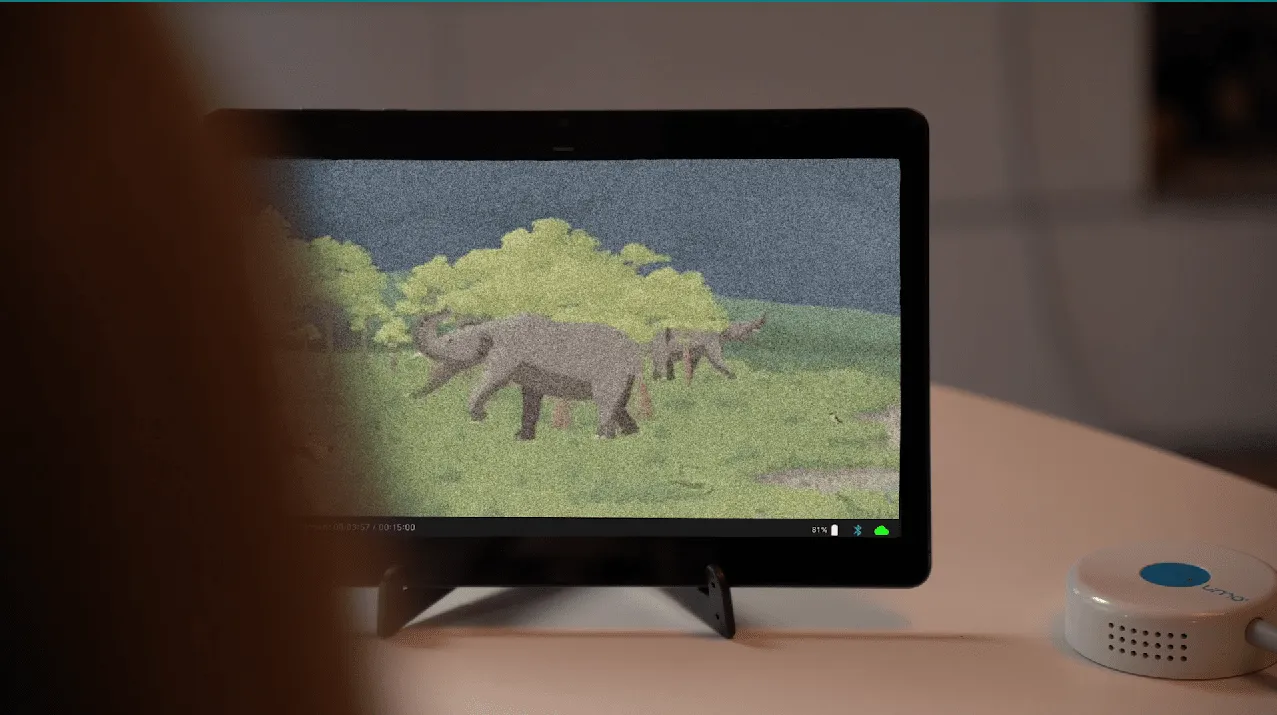
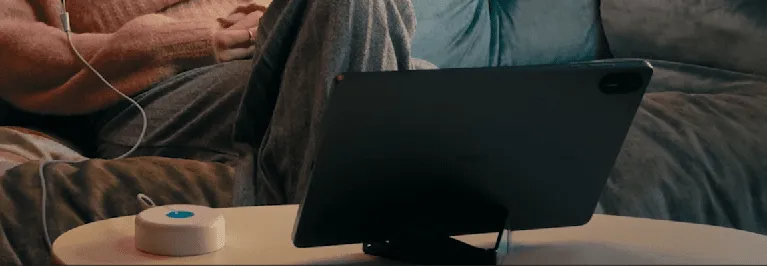
Your only job is to turn on the tablet, turn on Umo, put electrodes on your head (they only capture signals, they don't send any stimulus to your brain), and relax while watching an interesting video.
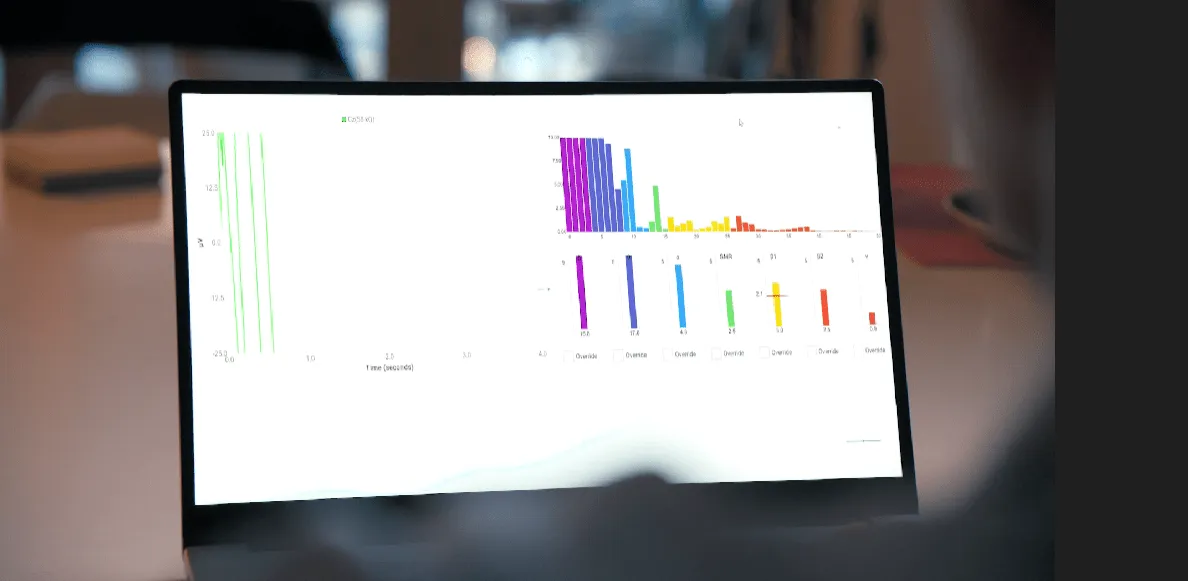
Our team monitors your data and guides your progress remotely. Training sessions last 15 to 30 minutes. You can train every day, with the occasional day off, at any time of day.
Your only job is to turn on the tablet, turn on Umo, put electrodes on your head (they only capture signals, they don't send any stimulus to your brain), and relax while watching an interesting video.
Our team monitors your data and guides your progress remotely. Training sessions last 15 to 30 minutes. You can train every day, with the occasional day off, at any time of day.
Professional supervision at every step

Dr. Giuseppe Chiarenza
Expert guidance
MD, child psychiatrist, neurologist and psychotherapist, BCIA-certified neurofeedback therapist, with more than 40 years of relevant experience. He designs and supervises the protocols of Umo training and, as part of the specialist analysis, creates individual protocols.
[email protected]
Marin Maletić
Training development and monitoring
A neuroscientist and the creator of the Umo platform. With a background in electrical engineering and the propaedeutics of psychotherapy, Marin oversees the remote monitoring and technical integration of your neurofeedback journey.
[email protected]Dr. Giuseppe Chiarenza
Expert guidance
MD, child psychiatrist, neurologist and psychotherapist, BCIA-certified neurofeedback therapist, with more than 40 years of relevant experience. He designs and supervises the protocols of Umo training and, as part of the specialist analysis, creates individual protocols.
Marin Maletić
Training development and monitoring
A neuroscientist and the creator of the Umo platform. With a background in electrical engineering and the propaedeutics of psychotherapy, Marin oversees the remote monitoring and technical integration of your neurofeedback journey.
The Umo Collective
Beyond Giuseppe and Marin, a network of specialists, psychotherapists, and performance coaches stands ready to support you. When your training requires deeper expertise or a broader perspective, the collective steps in, ensuring you are never navigating alone.
Umo partners

















* Names and photos in testimonials have been changed to protect privacy.
Frequently Asked Questions from Parents
Yes, neurofeedback is completely safe and non-invasive. It does not use any medication or electrical stimulation. The brain learns on its own, through visual and audio feedback. Neurofeedback is non-invasive: the electrodes only record brain activity and send nothing into the head.
Training length is individual: for children usually 20 to 30 minutes, in some cases shorter or longer. You can train every day. An occasional day off is welcome, so you can easily fit the rhythm around your daily commitments. Meanwhile the child watches a video.
Most parents notice the first changes within 2 to 4 weeks of regular training. Significant improvement is usually achieved after about 2 months.
Neurofeedback is a complementary method. Many parents notice that the need for medication decreases after regular training, but any change in therapy should be discussed with a doctor.
Neurofeedback is training, so the brain learns new patterns like any other skill. Your training supervisor follows your progress and decides with you when the programme is complete.
The child watches a video on the tablet. Small electrodes, attached to the head with conductive cream and connected by a cable to the Umo device, record brain activity. When the brain produces the desired brainwaves, the video plays in full quality; otherwise the playback quality drops. Our expert team monitors progress and adjusts the protocol.
Why Neurofeedback with Umo?
Neurofeedback has helped people overcome some of life's toughest challenges, from ADHD and anxiety to epilepsy and trauma recovery. At the same time, elite athletes, executives, and performers have used it to sharpen focus and unlock peak mental states. You can find more about the scientific research at isnr.org.
Umo opens the door. Whether you're seeking relief from a condition or striving to perform at your best, you can now train your brain at home, on your schedule, as often as you need. No across-the-city appointments, no fuss with technicalities, just a simple home setup with equipment you borrow from us.
Bridging the gap between the lab and the living room since 2016.
Get in touch
We'd love to hear from you